Dimensional Steel LLC

November 2025

How Accurate Detailing Enhances Safety and Structural Integrity

Safety is one of the non-negotiable pillars of the construction industry, and steel detailing plays a direct role in ensuring every structure is built to withstand its intended loads and environmental conditions. While the casual observer may see steel detailing as a drawing-based task, its influence runs far deeper. It strengthens the very foundation of project safety and long-term performance. Accurate steel detailing ensures that every connection, bolt, weld, and fabrication element matches engineering requirements. This precision eliminates errors that could compromise a building’s integrity during construction or over its lifespan. Even minor inaccuracies in detailing can lead to misalignments, connection failures, or unexpected stress points: all of which pose safety risks and increase the potential for costly repairs. With the rise of complex architectural designs, precise detailing has become even more critical. Modern structures often push the boundaries of form and engineering, requiring exact modeling, connection design, and load-path clarity. Detailers help translate these complex ideas into buildable, stable structures by coordinating closely with engineers and fabricators. In addition to fabrication clarity, accurate detailing enhances on-site safety. Installers rely on clear, conflict-free drawings to execute their work without unnecessary hazards. When components fit perfectly and installation sequences are well-planned, the need for dangerous improvisation on-site is reduced. Safety begins long before workers reach the job site and it begins with quality detailing. For clients committed to delivering secure, durable structures, working with an experienced detailing partner is a crucial step in ensuring that every phase of construction adheres to the highest safety standards.

How Accurate Detailing Enhances Safety and Structural Integrity Read More »
The Role of Technology in Modern Steel Detailing

Technology has transformed steel detailing from a manual drafting process into a sophisticated digital engineering function. In today’s construction landscape, modern tools and software are essential for delivering accurate, coordinated, and efficient outputs that meet the increasing demands of complex structures. 3D modeling platforms now form the backbone of steel detailing, enabling detailers to create highly accurate representations of structures before fabrication begins. These models allow fabricators and contractors to visualize how each component will fit together, reducing uncertainty and preventing installation conflicts. Advanced software also supports automated checking features that catch design inconsistencies early, long before they become expensive issues in the field. Cloud-based collaboration has further elevated project efficiency. Stakeholders across the world can now review models, track changes, and communicate in real time. This reduces the time spent waiting for revisions, eliminates version confusion, and enables faster decision-making—key benefits that help maintain momentum on time-sensitive projects. As technology continues to advance, steel detailing will only grow more precise and streamlined. Companies embracing these innovations are better equipped to deliver high-quality results, maintain cost efficiency, and support faster project cycles—positioning themselves as reliable partners in modern construction.

The Role of Technology in Modern Steel Detailing Read More »

Why Quality Steel Detailing Reduces Project Delays and Cost Overruns

In today’s fast-paced construction environment, time and accuracy are two of the most critical metrics that determine a project’s success. Steel detailing sits at the center of these metrics, ensuring that fabricators, contractors, and engineers all work from a unified and error-free set of models and drawings. When detailing is executed with precision, projects move smoothly. When it isn’t, delays and additional costs become almost unavoidable. Quality steel detailing eliminates ambiguity by providing complete clarity on every bolt, weld, connection, and assembly within a structure. This level of detail ensures that fabricators can confidently produce components without guesswork, reducing fabrication errors and cutting down on rework. Since rework is one of the most expensive elements in any project, reducing it dramatically impacts overall cost and time efficiency. Similarly, installers benefit from accurate, well-coordinated drawings that make on-site assembly faster, safer, and more predictable. Another major benefit of high-quality detailing is improved communication across teams. Detailed 3D models allow stakeholders to visualize the project and catch potential clashes early in the process. When issues are discovered digitally instead of on site, it saves tens of thousands of dollars and eliminates the domino-effect delays that often plague construction schedules. Ultimately, quality steel detailing is an investment that safeguards the timeline, budget, and safety of any project. For clients aiming to reduce risks and increase efficiency, working with a detailer who values accuracy and proactive planning is not just an advantage—it’s a necessity.

Why Quality Steel Detailing Reduces Project Delays and Cost Overruns Read More »

The Future of Steel Detailing: Trends Shaping Tomorrow’s Construction Industry

The construction industry is experiencing a shift driven by technology, precision engineering, and increasing global demands for faster, safer, and more sustainable building solutions. Steel detailing—once considered a purely technical support function—has now emerged as a core pillar of modern construction. As buildings become more complex and engineering expectations continue to rise, the role of steel detailers is expanding far beyond drafting. They are now essential contributors to project efficiency, cost savings, and project predictability. One of the most significant shifts happening today is the rapid adoption of intelligent detailing tools that maximize accuracy and streamline workflows. Technologies such as automated model creation, real-time clash detection, and cloud-based collaboration allow fabricators, engineers, and contractors to stay aligned throughout the project lifecycle. This increased accuracy not only reduces the risk of errors but also shortens production timelines, allowing stakeholders to move from concept to construction faster than ever before. Companies embracing these tools are finding that the investment pays for itself through reduced rework, better coordination, and improved installation efficiencies. As sustainability becomes a global priority, steel detailing is also playing an essential role in the push for greener construction. Optimized detailing helps reduce material waste by ensuring more efficient cuts, minimizing rework, and maximizing the usability of raw steel. Detailed digital models also help construction teams pre-plan logistics, which reduces fuel consumption and unnecessary on-site movements. The future of steel detailing is not just about drawing; it is about transforming the entire build process with intelligence, precision, and forward-thinking innovation. Companies that leverage these advancements position themselves as leaders in construction excellence—delivering projects that are faster, safer, and built for the long term.

The Future of Steel Detailing: Trends Shaping Tomorrow’s Construction Industry Read More »

Connection Design 101: Bolted, Welded & Hybrid Systems Explained

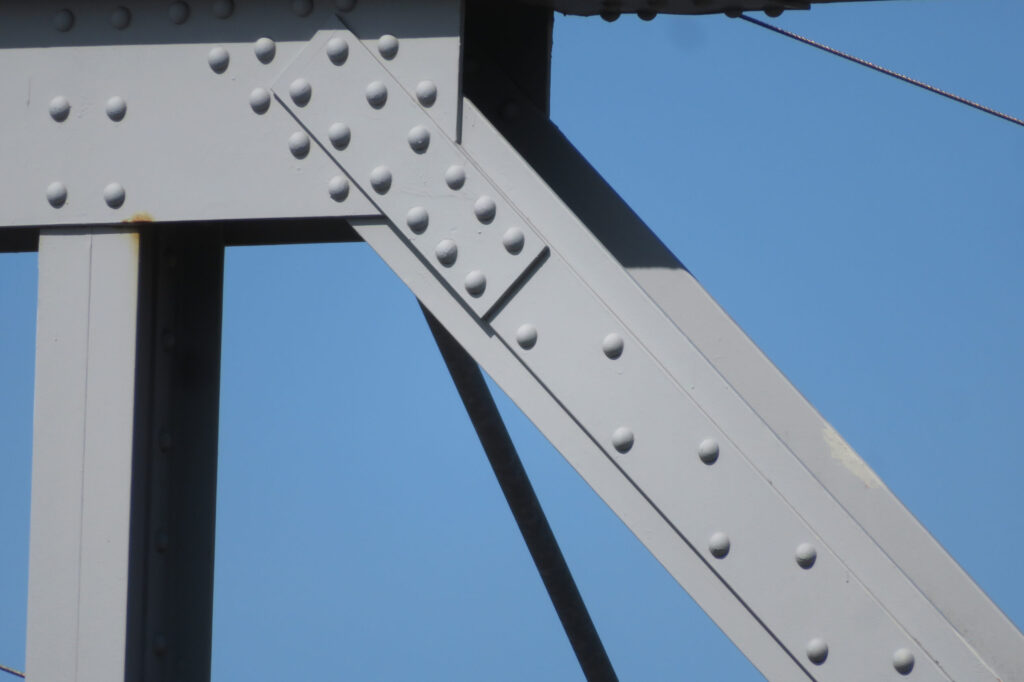
Connection design is one of the most critical aspects of structural steel engineering. It determines how loads are transferred, how members behave under stress, and how the entire structure performs throughout its lifespan. From industrial facilities to high-rise buildings, the integrity and safety of every steel structure rely heavily on the quality and design of its connections. This blog provides a clear, client-friendly explanation of bolted, welded, and hybrid connections and why they matter in real-world construction. The primary purpose of any steel connection is to safely transfer loads—tension, shear, compression, and moment—from one member to another. Connection effectiveness depends on multiple factors such as member geometry, fabrication practices, erection conditions, and governing design codes. Among all connection types, bolted and welded systems are the most widely used, each with its own strengths, limitations, and ideal applications. Choosing the right system impacts cost, fabrication complexity, construction speed, safety, and long-term performance. Bolted connections are often preferred for their simplicity, cost-effectiveness, and ease of installation. They are ideal for beam-to-column and beam-to-beam joints, offering excellent performance under shear and tension. High-strength bolts ensure reliability, and the ability to preassemble components at ground level significantly reduces onsite labor and enhances safety. Bolted connections are also easier to inspect, making them a practical choice for many types of projects. Welded connections create a continuous, rigid load path with high structural integrity. They are essential in applications requiring moment resistance or when aesthetics demand concealed joints. Welds provide exceptional strength but require skilled labor, stringent inspection, and controlled environmental conditions. Factors such as wind, weather, and temperature often influence the feasibility and cost of onsite welding. Therefore, welding is selected strategically based on project requirements rather than default preference. Hybrid connections combine the advantages of both bolted and welded systems. They enhance constructability, improve overall structural performance, and reduce erection time. For example, bolted elements may be used for simplicity and safety, while welded components provide additional rigidity. Hybrid systems are particularly effective in complex structures where both flexibility and strength are needed. All structural steel connections must comply with governing standards such as AISC 360, AISC 341, and NISD guidelines. These codes establish requirements for bolt grades, weld sizes, load resistance, ductility, and fabrication tolerances. Adhering to these standards ensures durability, safety, and performance. A qualified detailing team ensures every connection is designed, modeled, and checked in alignment with these codes, minimizing RFIs and preventing failures during fabrication or erection. In conclusion, connection design is far more than a technical detail—it is the foundation of structural stability and project safety. Understanding how bolted, welded, and hybrid systems work helps clients make informed decisions that enhance cost efficiency, constructability, and long-term performance. With the right engineering judgment, software tools, and detailing expertise, connection design becomes a powerful element that elevates the quality and reliability of every steel structure.

Connection Design 101: Bolted, Welded & Hybrid Systems Explained Read More »

Workforce, Culture & Company Values

A successful steel detailing project is never the result of one individual—it’s the product of a synchronized team driven by precision, discipline, and a shared commitment to excellence. Inside a modern steel detailing office, detailers, modelers, checkers, and project managers work together to convert engineering concepts into accurate, fabrication-ready drawings. Detailers translate design intent into shop drawings, modelers build coordinated 3D structures that eliminate clashes, and checkers ensure that every output meets technical accuracy and international standards. Together, these roles help reduce RFIs, prevent site-level errors, and enable smooth fabrication and erection. A strong detailing company invests heavily in training because software capabilities, industry standards, and client expectations evolve constantly. Teams undergo structured onboarding, continuous upskilling, and guided exposure to complex real-world projects. This training culture builds consistency and ensures that every professional understands AISC, NISD, and global steel codes. As a result, teams are equipped to handle complex connections, tight deadlines, and varying fabrication practices with confidence and accuracy. Technology further elevates the detailing workflow. Leading firms rely on advanced tools such as Tekla Structures, SDS/2, STAAD, RAM, and clash-detection systems to improve precision and reduce human error. These tools enable the modelling of complex geometries, multi-level QA/QC checks, automated clash detection, and seamless collaboration with consultants and fabricators. The integration of expert professionals and cutting-edge software leads to faster project cycles, fewer revisions, and exceptional accuracy that fabricators and contractors can depend on. At the heart of every high-performing detailing office is its culture. Collaboration, accountability, and transparent communication shape how teams interact internally and with clients. A positive and supportive environment encourages ownership and pride—qualities essential in an industry where even the smallest oversight can trigger costly delays. When teams are empowered, motivated, and aligned with shared values, quality becomes a habit rather than a goal. Ultimately, the strength of a steel detailing company lies in its people, processes, and culture. A well-trained workforce supported by advanced technology and a collaborative environment delivers consistent excellence. Clients benefit from accurate drawings, improved fabrication efficiency, minimized RFIs, and smoother site execution—results that are rooted in the skills, dedication, and culture behind every project.

Workforce, Culture & Company Values Read More »

Scroll to Top
Call Now Button